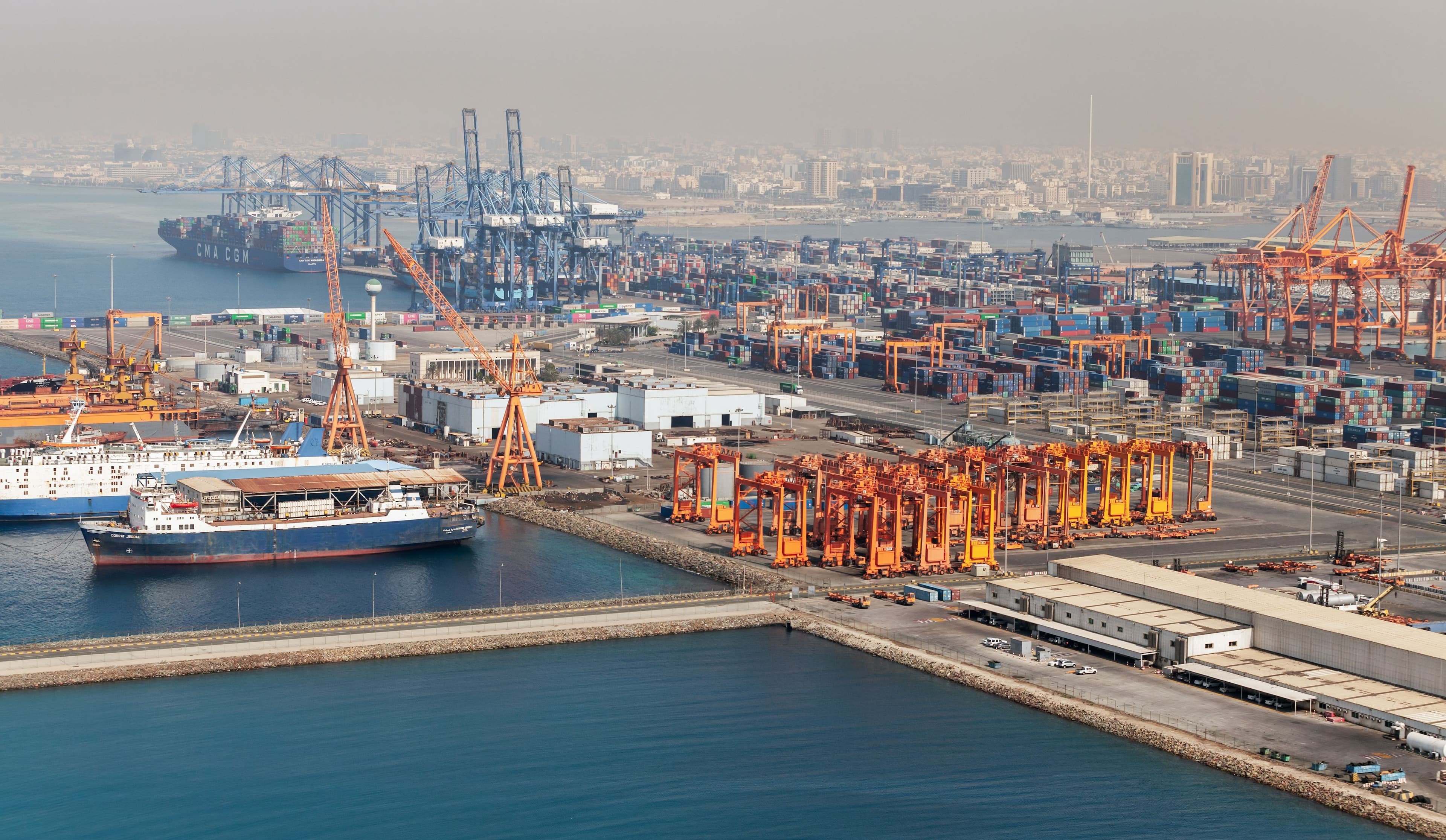
Saudi Arabia Logistics Pipeline 2026: Where the Next Deals Are
Saudi Arabia’s transport and logistics sector is entering a major procurement cycle, with rail, metro, aviation, and road projects progressing through tenders, RFPs, and EOIs
Saudi Arabia’s transport and logistics sector is entering a major procurement cycle, with rail, metro, aviation, and road projects progressing through tenders, RFPs, and EOIs
Saudi Arabia’s transport and logistics sector is already in the midst of a major procurement cycle, with large-scale projects moving into active tender, request for proposal (RFP), and expression of interest (EOI) stages across rail, aviation, roads, metro, and ports.
Driven by the National Transport and Logistics Strategy and aligned with Vision 2030, government entities are actively engaging local and international partners to deliver the Kingdom’s next phase of infrastructure transformation. Many of these opportunities are already in formal procurement phases, while additional tenders are expected to be launched in the coming months.
For international companies, timing has become a decisive factor. Market entry is no longer only about bid readiness but also about establishing a compliant legal and operational presence in Saudi Arabia, which is often a prerequisite for participating in and executing major government contracts.
Rail Projects in Saudi Arabia: The Largest Active Procurement Wave
Saudi Arabia Railways (SAR) is currently overseeing one of the most active rail procurement pipelines in its history, with multiple programs advancing in parallel across infrastructure expansion and rolling stock modernization. These projects are designed to strengthen national connectivity, improve freight efficiency, and significantly expand passenger rail capacity.
The Landbridge Railway: A Strategic East–West Freight Corridor
Saudi Arabia Railways has significantly advanced procurement activity on the long-planned Landbridge Railway, one of the Kingdom’s most strategically important transport infrastructure projects.
The Landbridge is designed to create a direct freight and passenger rail connection between the Red Sea and the Arabian Gulf, linking key economic and logistics hubs including Jeddah, King Abdullah Port, Riyadh, Dammam, Jubail, and Yanbu. The project will dramatically reduce cross-country cargo transit times and reinforce Saudi Arabia’s position as a global logistics gateway.
The project is valued at approximately $26.6 billion (SAR 100 billion) and spans more than 1,500 kilometers of new and upgraded railway infrastructure. At its core, the development includes a 950-kilometer Riyadh–Jeddah corridor, a 115-kilometer Dammam–Jubail connection, and a series of logistics hubs and freight facilities distributed along the route to support multimodal operations.
On the procurement side, SAR has already issued a lead design consultancy tender covering concept, preliminary, and IFC design phases. As engineering work advances, construction opportunities are expected to emerge progressively across multiple disciplines, including civil works, systems integration, and rail technology supply.
Northern Network Rolling Stock Expansion
Alongside major infrastructure development, SAR is also advancing a significant rolling stock procurement program aimed at expanding passenger capacity across its national rail network.
The Northern Network spans approximately 2,700 kilometers and connects Riyadh with key northern cities, including Al-Majmaah, Qassim, Hail, Al-Jouf, and Al-Qurayyat.
The corridor plays an important role in linking population centers with industrial and mining zones and continues to expand its passenger rail offering through additional station development and service enhancements.
In January 2026, SAR issued a tender covering the design, manufacture, supply, and long-term maintenance of 10 new passenger trains for the Northern Network. The contract includes full lifecycle responsibilities, creating opportunities not only for rolling stock manufacturers but also for maintenance providers and systems integrators.
The new fleet is expected to nearly triple passenger capacity on the network, increasing annual seating capacity to more than 2.4 million passengers, and forms part of SAR’s broader fleet modernization strategy under Vision 2030.
Qiddiya High-Speed Rail: A Flagship PPP Urban Mobility Project
The Qiddiya High-Speed Rail project represents one of Saudi Arabia’s most significant public-private partnership transport developments, designed to transform mobility within Riyadh’s expanding urban and entertainment districts.
Developed by the Royal Commission for Riyadh City in partnership with Qiddiya Investment Company and the National Center for Privatization and PPP, the project will connect King Salman International Airport, King Abdullah Financial District, central Riyadh, and Qiddiya City. Once completed, it will reduce travel times across the corridor to under 30 minutes.
Procurement activity has progressed steadily over the past two years. A market sounding and expression of interest phase launched in 2024 attracted more than 145 companies. Following the evaluation, 24 firms were shortlisted for the next stage, and prequalification processes for the EPC package are now underway, marking a clear transition toward delivery.
Metro Projects in Saudi Arabia: Riyadh Expo 2030 Works and Jeddah Network Revival
Metro development is accelerating across Saudi Arabia as part of a broader push to expand urban mobility infrastructure, support population growth, and prepare key cities for major global events, including Expo 2030 in Riyadh.
Riyadh Metro: Expo 2030 Station Contracts Under Procurement
In Riyadh, the Royal Commission for Riyadh City (RCRC) is advancing multiple, distinct metro station packages linked to the Expo 2030 development zone, rather than a single combined contract.
One procurement package covers the development of a new metro station on Line 4 (Yellow Line) of the Riyadh Metro, designed to provide direct connectivity to the Expo 2030 site.
Separately, the RCRC announced the awarding of the design, construction, and completion of the Red Line expansion of the Riyadh Metro, extending the current line by 8.4 kilometers.
Jeddah Metro Blue Line: Revival After a Decade of Pause
In Jeddah, the metro program has re-entered active procurement after nearly a decade of inactivity. In January 2026, authorities issued a tender for preliminary design consultancy services for the Blue Line.
The proposed Blue Line spans approximately 35 kilometers and will connect King Abdulaziz International Airport with the Haramain High-Speed Railway station, serving 15 stations along the route. The project is being led by the Jeddah Development Authority and is expected to form the first phase of a wider urban transit network.
Once fully developed, the Jeddah Metro system is planned to include four lines covering more than 161 kilometers and 81 stations, creating substantial long-term opportunities across design, construction, systems integration, rolling stock supply, and operations.
Aviation Projects in Saudi Arabia: Airport Expansion and Market Liberalization
Saudi Arabia’s aviation sector is undergoing one of its most ambitious expansion programs, driven by airport privatization, terminal development, and increased competition through new airline licensing.
Taif International Airport: PPP-Driven Expansion
The new Taif International Airport is being developed under a public-private partnership model and is designed to serve as a secondary gateway for western Saudi Arabia. It will also play an important role in supporting Hajj and Umrah traffic by easing pressure on Jeddah’s King Abdulaziz International Airport.
Matarat Holding, in partnership with the National Center for Privatization and PPP, has issued a request for proposals under a Build-Transfer-Operate concession with a 30-year operating term. The airport will be located approximately 21 kilometers southeast of the existing facility and will initially accommodate 2.5 million passengers annually by 2030, with capacity for future expansion.
Qassim Airport Expansion Program: PPP-Driven Redevelopment Attracts 89 Global Bidders
The modernization of Qassim Airport (Prince Naif bin Abdulaziz International Airport) is advancing through the national airport privatization pipeline, marking one of the most actively subscribed aviation PPP opportunities currently in procurement in Saudi Arabia.
Led by Matarat Holding in partnership with the National Center for Privatization and PPP (NCP), the project has entered the Expression of Interest (EOI) stage, attracting strong international and domestic investor participation as the Kingdom continues to expand its regional aviation infrastructure footprint.
Recent procurement updates indicate that the EOI phase has drawn 89 participating entities, including both Saudi and international consortia, highlighting strong competition across developers, EPC contractors, operators, advisors, and financial investors.
The project is being structured as a long-term public-private partnership (PPP) concession with a typical scope covering design, financing, construction, transfer, operations, and maintenance over a 30-year term. Located approximately 25 kilometers from Buraidah, the capital of the Qassim region, the airport is positioned to serve both growing passenger demand and the region’s expanding economic base.
King Salman International Airport: One of the World’s Largest Airport Projects
In Riyadh, the development of King Salman International Airport continues through phased procurement packages. Among the most advanced components is Terminal 6, which has reached the early contractor involvement stage, with three international consortia shortlisted to participate. Once completed, the terminal is expected to accommodate an additional 40 million passengers annually ahead of Riyadh’s Expo 2030.
Separately, a private aviation terminal has also been tendered, creating additional opportunities across specialized airport infrastructure, terminal systems, and passenger experience technologies.
Once fully developed, King Salman International Airport is expected to become one of the largest airports in the world, targeting 100 million passengers annually by 2030 and up to 185 million passengers by 2050, positioning it as a long-term hub for aviation-related procurement activity.
Roads in Saudi Arabia: Expansion Through PPP Highway Projects
Saudi Arabia is increasingly adopting public-private partnership models to deliver major highway infrastructure, while also investing heavily in national road upgrades and safety improvements.
Aseer–Jazan Highway: A Major Southern PPP Corridor
One of the most significant road projects currently in procurement is the Aseer–Jazan Highway, developed by the Roads General Authority in collaboration with the National Center for Privatization and PPP and the Aseer Development Authority.
The project is being delivered under a Design-Build-Finance-Operate-Maintain model with a 30-year concession period. The expression of interest phase has been opened to both local and international investors, reflecting Saudi Arabia’s continued shift toward long-term private sector participation in infrastructure delivery.
In parallel, the Roads General Authority has announced approximately SAR 3 billion, or $798 million, in road investments in the Riyadh region alone. These projects span new road construction, maintenance programs, and traffic safety enhancements as part of a broader national effort to improve connectivity and logistics efficiency.
As procurement activity continues to accelerate through 2026, Saudi Arabia’s transport and logistics sector is expected to remain one of the most active infrastructure markets globally, with sustained tender flow across both mega-projects and supporting logistics ecosystems.
More from Market outlook


