Sports Contracting and the Future of Sustainable Sports Infrastructure in Saudi Arabia
Saudi Arabia’s expanding sports infrastructure pipeline is creating new opportunities for contractors, developers, operators, and investors.
Saudi Arabia’s expanding sports infrastructure pipeline is creating new opportunities for contractors, developers, operators, and investors.
Saudi Arabia is actively advancing the tendering of major stadium construction projects as part of its infrastructure rollout for the 2034 FIFA World Cup. With an estimated SAR 75 billion ($20 billion) investment, the Kingdom’s stadium program represents one of the most capital-intensive sports infrastructure developments in its modern history.
As many as 15 World Cup stadiums are in the national pipeline, alongside more than 134 planned training sites nationwide. Several large-scale venues are increasingly being designed as multi-use, commercially viable destinations, extending their role beyond major sporting events.
As contracting opportunities become larger and more diverse, the Kingdom is also introducing new financing and procurement models that are opening the sector to greater private-sector participation.
Public-private partnerships (PPPs), in particular, are emerging as an important route into Saudi Arabia's sports infrastructure market for foreign companies looking to set up and expand their presence in the Kingdom.
A Sports Construction Pipeline at National Scale
Saudi Arabia’s sports infrastructure pipeline is expanding across multiple cities and project types.
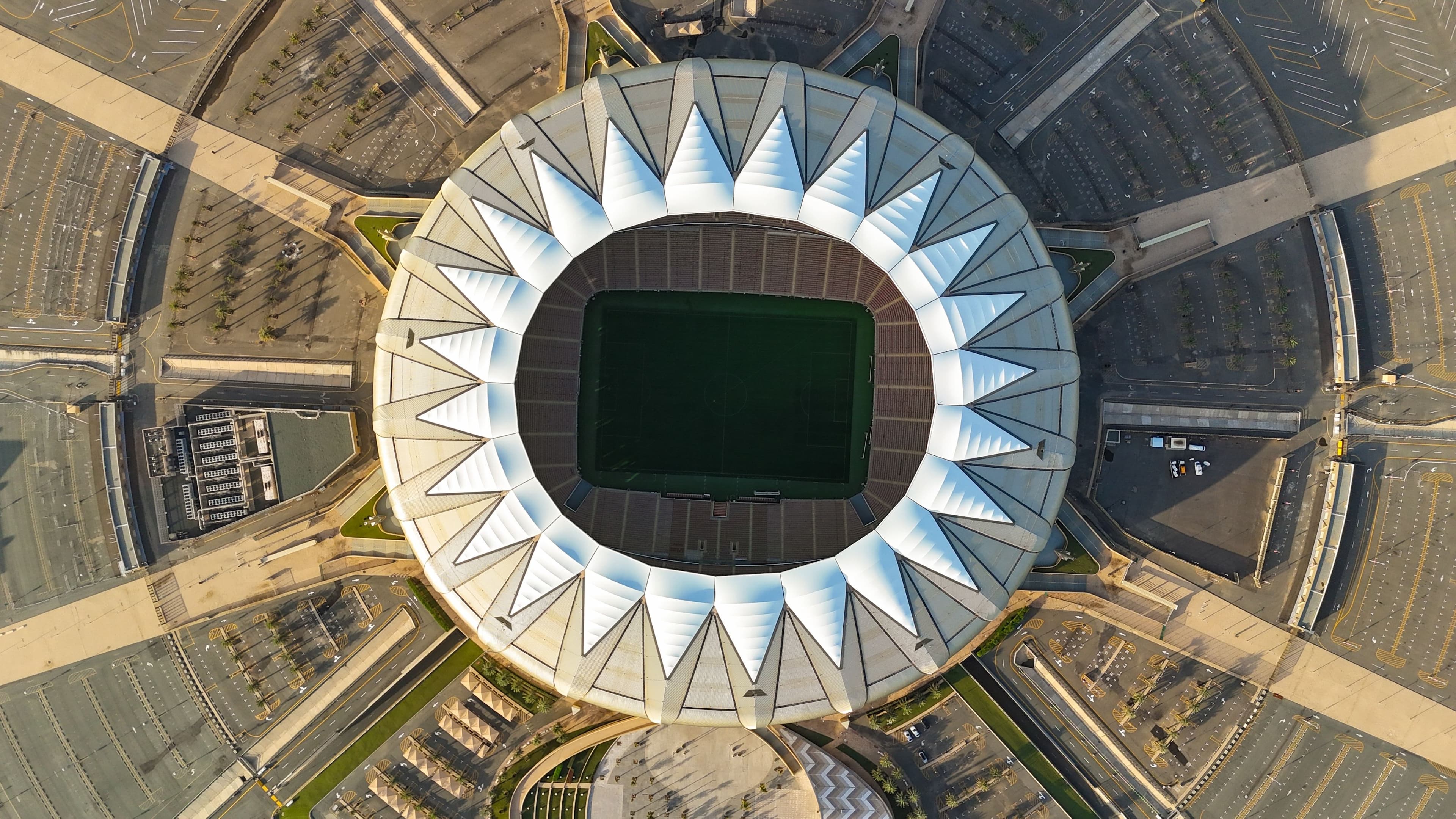
Several major stadium contracts have already moved into execution. Jeddah Central Development Company awarded an estimated SAR 6.7 billion ($1.8 billion) contract for the Jeddah Central stadium, while Aramco awarded a SAR 3.7 billion ($1 billion) stadium contract in Dammam. Qiddiya Investment Company also awarded the Prince Mohammed bin Salman Stadium to FCC Construcción and Nesma & Partners for approximately SAR 3.7 billion.
The pipeline also comprises other major sporting development projects. In early 2026, Saudi Arabia announced the SAR 1 billion Dammam Sports City, backed by the Sharqia Development Authority, Dammam Valley Co., and the Ministry of Investment. The project reflects the growing focus on sports as part of broader mixed-use urban and commercial development.
The Kingdom is working on opening existing facilities to new investment models. In 2025, the Ministry of Sport launched its Sports Facilities Investment project covering three major sports cities in Jeddah and Makkah. The opportunities included naming rights, leasing facilities, and the operation, management, and maintenance of sports venues.
Saudi Arabia is also experimenting with procurement structures that give private companies a longer-term role in sports infrastructure.
One example is the Prince Faisal bin Fahd Sports City redevelopment in Riyadh, which is being structured as a public-private partnership under a 20–30-year Design, Build, Finance, Operate, Maintain (DBFOM) model. The planned stadium will have capacity for approximately 47,000 spectators and is expected to host major domestic and international events, including the 2034 FIFA World Cup.
As it stands, the contracting ecosystem reflects a shift beyond a construction-only model to include the design, financing, operation, maintenance, and other commercial aspects of sports assets.
The 2034 FIFA World Cup Is Accelerating Procurement
The upcoming 2034 FIFA World Cup is adding another layer of urgency to Saudi Arabia’s sports infrastructure program.
Saudi Arabia’s World Cup plans include 15 stadiums, with 11 new builds and four existing venues undergoing upgrades. The venues are planned across Riyadh, Jeddah, Al-Khobar, Abha, and NEOM.
The infrastructure requirements extend beyond the stadiums themselves. The program includes 134 training sites nationwide, including 73 new builds. In January 2026, the Ministry of Sport began prequalification for 68 training sites, indicating that procurement is already moving planning into execution.
Sustainability is becoming increasingly embedded in how sports assets are designed, operated, and commercialized.
The Kingdom has announced plans for a groundbreaking $1 billion “Sky Stadium” within NEOM’s The Line, positioned 350 meters (1,150 feet) above ground as part of the development’s vertical cityscape. The venue is planned to be powered entirely by renewable energy, reflecting how sustainability considerations are being integrated into Saudi Arabia’s broader sports infrastructure push.
Beyond the event itself, the Kingdom is also planning to integrate these venues into its wider sports and entertainment landscape, ensuring their relevance and commercial viability extend well beyond major tournaments.
This approach can improve long-term asset utilization while supporting commercial activity and helping venues generate revenue before, during, and after major events.


